
The Software Advantage: Why Modern Defense Operates on Data and Decisions
InLEX KOREA 2026
Dtonic will be participating in InLEX KOREA 2026, one of Korea's leading defense and logistics industry exhibitions bringing together government, military, industry, academia, and research institutions.
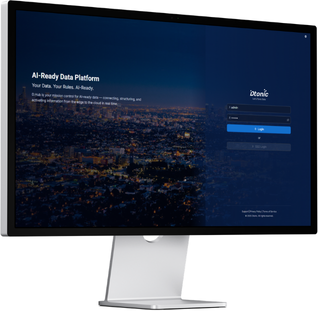
At the event, we will showcase D.Hub 2.0, our secure data and AI platform designed for defense and mission-critical operations — enabling unified operational data, real-time event intelligence, and AI-driven decision support.
We look forward to connecting with partners and organizations exploring next-generation defense and operational intelligence systems.
Two forces with identical hardware. One with an integrated data and AI layer. One without. The gap between them is no longer measured in firepower — it is measured in decision speed.
Informed by reporting from Johnny Harris and Shashank Joshi, Defence Editor at The Economist.A quiet consensus is emerging among defense analysts, military planners, and national security strategists: the decisive advantage in modern operations is no longer just the weapon at the end of the chain. It is the speed and accuracy of everything that happens before it.
Sensors collect data. Analysts interpret it. Commanders make decisions. Assets respond. This intelligence-to-action cycle has always shaped operational outcomes. What has changed is the pace at which it can move, and how much of that process can now be supported by software instead of people working manually across disconnected systems.
Organizations that recognize this are no longer debating whether to modernize their data and AI capabilities. They are focused on how to do it in environments where the cost of failure is simply too high.
Sensor-to-Decision Loop is a Data Problem
To understand why integrated data infrastructure has become a defense priority, it helps to start with the real operational challenge.
In any complex mission, the essential task follows a cycle: identify what matters, assess its significance, choose the right response, coordinate action, and evaluate the outcome. Every stage depends on information gathered from sensors, shared across systems, interpreted by analysts, and acted on by operators.
Historically, this process has involved major friction. Imagery often needs manual review. Intelligence from multiple sources has to be matched and verified by hand. Situational awareness may exist in one command center but not another. By the time a decision is made, conditions on the ground may already have changed.
As Shashank Joshi, Defence Editor at The Economist, has noted, the most consequential moments in operations are rarely the final ones. They happen earlier, during identification, assessment, and prioritization. That is where speed and accuracy matter most, and where software can have the greatest impact.
Victory, as it has always been, tends to favor those who can gather the best information and make accurate decisionsthe fastest. The difference today is that software can compress the time between sensing and deciding from hours to minutes — but only when the underlying data infrastructure is built to support it.
The Challenge Legacy Systems Cannot Solve
Defense organizations operating today face a set of structural problems that legacy architectures were never designed to handle.
Sensor networks have expanded dramatically. Radar systems, electro-optical and infrared sensors, UAV feeds, telemetry streams, GIS data, signals intelligence, communications intercepts, and open-source data all generate continuous, high-volume information flows. The data volumes now routinely exceed the capacity of human operators to process manually.
At the same time, these systems are deeply fragmented. Built across decades, running on incompatible protocols, managed by different units and commands, deployed across land, sea, air, cyber, and critical infrastructure domains — the data exists, but it does not speak to itself. Each system holds a partial picture. No single operator sees the whole.
The result is what defense planners recognize immediately: delayed intelligence-to-action cycles, limited interoperability across platforms, and difficulty operationalizing AI in ways that preserve command trust and accountability. The information advantage that modern sensor networks theoretically provide is lost in the gap between data generation and operational decision.
Solving this problem requires more than connecting systems. It requires an entirely different architectural approach — one that was built for this environment from the start.
What a Purpose-Built Platform Makes Possible
The goal many serious defense organizations are pursuing is clear: bring together data from all sources and across all domains into a single integrated platform that helps commanders make faster, better-informed decisions. Operational planners often describe this as a Common Operating Picture.
This is becoming the foundation of defense operations in the AI era. Reaching that standard requires a platform built with a set of specific, non-negotiable capabilities.
Dtonic’s D.Hub 2.0 is designed around this challenge: turning fragmented operational data into a secure, real-time decision environment where commanders and operators can act with greater speed, clarity, and control.
Unified Operational Data Layer
The platform must bring together the full range of operational data sources, including radar, electro-optical and infrared systems, UAV feeds, telemetry, GIS, communications, and external intelligence streams, into one synchronized environment. Not a separate dashboard for each sensor. One live operational picture that shows the real situation as it stands now and updates continuously as new data comes in.
That requires the ability to connect with systems regardless of their age, origin, or protocol. Legacy infrastructure, modern cloud platforms, edge-deployed sensors, and third-party feeds all need to contribute to the shared picture without forcing organizations to replace or rebuild what they already have.
This is where D.Hub 2.0 provides practical value through large-scale data integration, real-time synchronization, and interoperability across mixed technology environments.
Real-Time Event Intelligence
A unified data layer is only operationally valuable if it surfaces what matters, when it matters. The platform must detect movement, anomalies, threats, and mission-critical changes as events happen, not as summaries assembled after the fact. Operators should not have to search for significance in a stream of raw data. The system should bring significance to them.
This event-driven intelligence layer is what transforms a data integration platform into an operational decision support system. It is the difference between a system that stores information and a system that actively supports situational awareness.
With embedded analytics and event processing, D.Hub 2.0 is built to help organizations move from passive monitoring to active operational awareness.
Secure and Sovereign Deployment
Defense data cannot pass through infrastructure that organizations do not fully control. That is a hard requirement, and it is where many commercial platforms fall short for defense use.
A platform built for defense must operate across the full range of mission environments. That includes on-premise deployments, private cloud infrastructure, forward edge locations, and fully air-gapped settings where no outside connectivity is available or allowed. Core capabilities need to remain reliable regardless of network conditions, and data sovereignty must be protected at all times.
This cannot be treated as an optional feature to add later. It has to be built into the foundation from the start, shaping every part of the platform architecture and deployment model.
D.Hub 2.0 supports flexible deployment models so mission owners can maintain control of infrastructure, access, and sensitive operational data.
AI Decision Support with Human-in-the-Loop Control
Even the most advanced AI system is only useful in real operations if commanders trust it, understand how it works, and can hold it accountable.
AI should not replace command judgment in defense operations. Its role is to strengthen that judgment by giving leaders the clearest possible operating picture. AI can take on the heavy analytical workload such as combining data from multiple sources, spotting anomalies, prioritizing threats, and identifying patterns that might otherwise take staff teams hours to uncover. Final decisions, especially those with serious consequences, must remain with people.
That means the platform needs to deliver recommendations that can be explained and challenged. Commanders should be able to see why a conclusion was reached, ask questions, and test the reasoning behind it. It also means approval processes that keep humans genuinely involved, rather than simply confirming automated suggestions. Accountability must remain clear, traceable, and open to review.
As Joshi has pointed out, the real issue is not whether machines play a role in decisions. It is whether the people working with those systems understand them well enough to know when to rely on them and when to question them.
D.Hub 2.0 is built with this principle in mind: AI that supports operators, transparent workflows that preserve human control, and governance structures suited to mission-critical environments.
Beyond the Battlefield: Critical Infrastructure and Security Operations
The same architecture that supports military command operations applies directly to the broader defense and security mission.
Critical Infrastructure Protection
Ports, energy utilities, airports, logistics hubs, and national assets face operational challenges that mirror those of command environments: distributed sensor networks, high data volumes, fragmented monitoring systems, and the need to move from passive detection to active, coordinated response. Mission-grade operational intelligence — the kind built for defense — translates directly into resilient operations for the infrastructure that modern societies depend on.
Border, Maritime, and Base Security
Dynamic environments with persistent surveillance requirements demand more than static monitoring. Effective security operations require continuous detection across wide areas, rapid assessment of detected events, and coordinated response that brings the right assets to bear at the right time. The gap between fragmented awareness and adaptive, unified security operations is exactly what integrated operational intelligence is designed to close.
Common Operating Picture Across All Domains
Whether the operational environment is a forward command post, a maritime operations center, a port authority, or a national infrastructure monitoring facility, the fundamental requirement is the same: unified data across all relevant sensors and systems, surfaced as a single live operational view that supports faster, better decisions.
The organizations that build this capability — across land, sea, air, cyber, and infrastructure domains — are the ones that will be prepared for the pace and complexity of the operational environments ahead.
The Foundation for AI-Era Operations
The transition from legacy systems to AI-era defense operations does not require replacing everything at once. It requires building the right foundation — a secure, sovereign data and AI platform layer that connects what already exists, fuses it into a coherent operational picture, and supports the human decisions that determine outcomes.
The software advantage in modern operations is real. It is not about any single algorithm or AI model. It is about whether an organization's entire data environment — its sensors, its systems, its institutional knowledge, its operational rules — is connected and accessible in a form that both humans and AI can work with effectively.
Those who build this foundation gain a compounding advantage: every new sensor, every new data source, every new AI capability adds to a unified operational picture rather than creating another silo. Those who do not build it face the same fragmentation problem at increasing scale, with increasing cost.
The future of defense operations will be shaped by software, data, resilience, and speed. The question is no longer whether to build this foundation, but how quickly it can be done.
The organizations that close the gap between sensing and deciding first will define the next era of defense readiness.
D.Hub 2.0 is Dtonic's secure data and AI platform for defense and mission-critical operations. Built for sovereign deployment across on-premise, private cloud, edge, and air-gapped environments, D.Hub 2.0 integrates multi-source operational data, delivers real-time event intelligence, and supports AI-driven decision making with human-in-the-loop control — across command operations, critical infrastructure protection, and border, maritime, and base security.
Request a consultation to explore how D.Hub 2.0 supports next-generation defense and security operations. Send us an email.
This article was informed by the analysis of Johnny Harris and Shashank Joshi, Defence Editor at The Economist.
Recommended reading: "AI Will Transform the Character of Warfare" and "How AI Is Changing Warfare," both published by The Economist.