D.Hub 2.0
The End-to-End AI Data Platform

D.Hub 2.0 is Dtonic’s full-stack AI data platform that covers the entire lifecycle — from data collection to AI-driven action, orchestration, and real-world execution.

Unlike fragmented data stacks, D.Hub delivers a complete, unified architecture, enabling organizations to build, deploy, and scale AI with speed, accuracy, and efficiency.

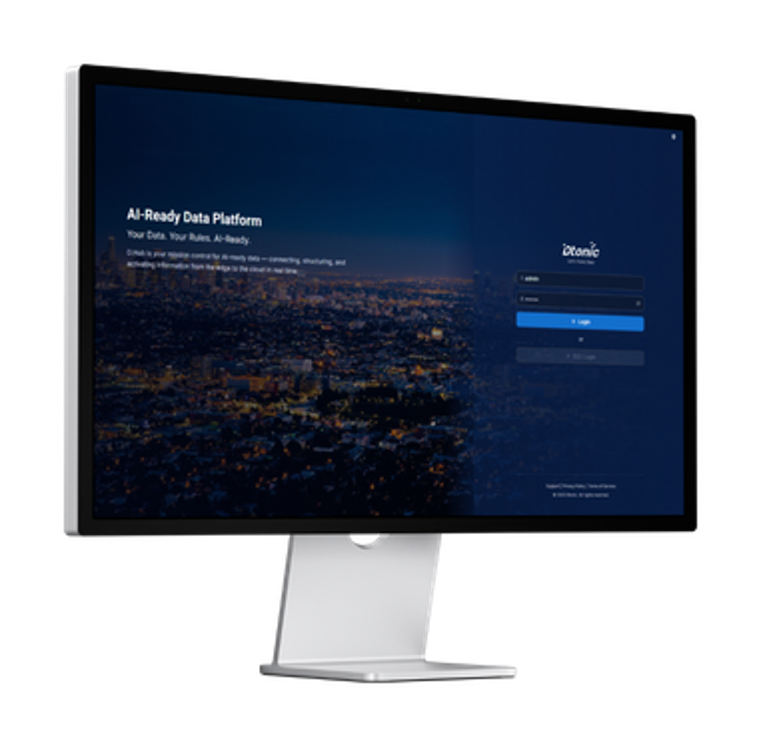
Computer monitor displaying a login screen for an AI data platform with a cityscape background at dusk.

Dtonic’s AI Data Platform Advantages

Real-Time Intelligence, Operational by Design

From ingestion to execution, data is processed, analyzed, and acted on instantly — enabling continuous, real-time operations.

Orchestrated & Interoperable

Seamlessly connects data, AI models, and workflows across existing systems, cloud, and edge — with built-in orchestration for end-to-end execution.

AI-Native Architecture,
AI-Ready

Built with ontology, Hybrid RAG, and Agentic AI at its core — delivering reliable, explainable, and actionable AI outcomes.

Governed, Transparent, and Enterprise-Ready

End-to-end data governance, lineage, and access control ensure secure, traceable, and compliant operations at scale.


2.85×
Faster Queries
19.64×
Memory Efficiency
93.93%
AI Accuracy
814×
Spatial Processing

Where D.Hub Fits in the Modern AI Data Platform Stack

D.Hub spans all layers

How AI Systems Are Structured

AI systems are built across multiple layers — from infrastructure and data processing to AI models and user-facing applications. Each layer plays a role in turning raw data into meaningful outcomes.

Connected, Not Fragmented

D.Hub 2.0 brings these layers together into a single, connected system.

Instead of managing separate tools for data, AI, and operations, everything works as one — enabling a smooth flow from data to insight to action. This makes it easier to build, run, and scale AI in real-world environments.

🖥️ 📱 💬
Application & User Experience Layer
User interfaces, workflows, and real-time interaction with AI-driven insights and actions.
🧠 🔑 ⚙️
Semantic & Decision Layer
Ontology-based context modeling, decision-making, and operational AI.
🤖 🧠 🔗
Model & AI Layer
ML, LLMs, Hybrid RAG, and Agentic AI for training, inference, and execution.
📊 ⚡ 🔄
Data Management & Processing Layer
Real-time ingestion, distributed processing (Geo-Hiker™), storage, and orchestration.
☁️ 🖧 🗄️
Infrastructure & Compute Layer
Cloud, on-premise, and edge infrastructure providing compute, storage, and networking.
▲ D.Hub 2.0 spans all layers
From data ingestion to AI, orchestration, and real-time execution — delivering a fully integrated, end-to-end AI platform.

Why D.Hub Outperforms Fragmented AI Data Stacks

Complete End-to-End AI Platform vs Multiple Disconnected Tools

D.Hub 2.0

  • ✅ Native data collection
  • ✅ Geo-Hiker™ distributed processing
  • ✅ Ontology-based data modeling
  • ✅ Built-in governance & lineage
  • ✅ Hybrid RAG + LLM integration
  • ✅ Agentic AI ready
  • ✅ Codeless AI / MLOps
▲ 7-layer End-to-End AI Platform
VS

Typical Platforms

  • ❌ No native data collection
  • ⚠️ Processing only (no full stack)
  • ❌ No ontology layer
  • ⚠️ Limited governance
  • ⚠️ Basic / partial RAG
  • ❌ No agentic AI
  • ⚠️ Requires external MLOps
Fragmented architecture with multiple tools
D.Hub replaces fragmented stacks with one unified AI platform

End-to-End AI, Built for Real-World Execution

D.Hub 2.0 empowers organizations to operate and scale in an AI-driven world — not through fragmented tools, but through a fully integrated, end-to-end AI platform.

We enable enterprises to move beyond experimentation by providing the complete foundation required to design, deploy, and operate AI at scale. From real-time data collection to advanced AI applications such as Agentic AI and Hybrid RAG, D.Hub ensures that every layer of the AI lifecycle is connected, governed, and optimized.

Unlike conventional platforms that focus only on data processing, D.Hub delivers a 7-layer architecture covering the entire journey — from raw data to intelligent action.

This allows organizations to:

  • Replace fragmented data stacks

  • Reduce operational complexity

  • Deploy production AI faster

  • Improve governance and reliability

  • Lower total cost of ownership

D.Hub is already applied across complex, real-world environments — supporting mission-critical systems in smart cities, industrial operations, retail, and healthcare.

Measurable AI Platform Results

  • 2.85× faster query performance

  • 19.64× memory efficiency

  • 93.93% AI accuracy (RAGAS benchmark)

  • 814× spatial data processing performance

  • Up to 65% reduction in total cost of ownership

7-Layer End-to-End AI Data Platform Architecture

7-Layer End-to-End AI Data Platform Architecture

1. Multimodal Data Collection & Storage

  • Real-time ingestion from sensors, devices, enterprise systems

  • Supports structured + unstructured + multimodal data

Competitors typically rely on external ingestion pipelines

2. Distributed Data Processing (Geo-Hiker™)

  • High-performance distributed processing engine

  • Native spatial analytics (Geo-Hiker™)

  • Handles real-time, large-scale workloads efficiently

→ 814× faster spatial processing vs Databricks

3. Ontology-Based Data Processing

  • Semantic modeling of complex data relationships

  • Graph + ontology-based structuring

  • Enables explainable, context-aware AI

→ A critical capability missing in most modern data platforms

4. Data Governance & Lineage

  • Built-in governance framework

  • Full data lineage and traceability

  • Enterprise-grade access control

→ Stronger governance and transparency vs typical lakehouse architectures

5. Hybrid RAG / LLM Integration

  • Native support for Hybrid RAG (Graph + Vector)

  • Seamless integration with LLMs

  • Reduces hallucination and improves reliability

→ 93.93% RAGAS accuracy (KOLAS benchmark)

6. AI Agent · Agentic AI

  • Supports autonomous AI agents

  • Context-aware reasoning and decision-making

  • Enables real-time AI-driven operations

7. Codeless AI / MLOps

  • Build, deploy, and manage AI without heavy coding

  • End-to-end lifecycle management

  • Accelerates time-to-production for AI services

The Improved D.Hub 2.0‍ ‍

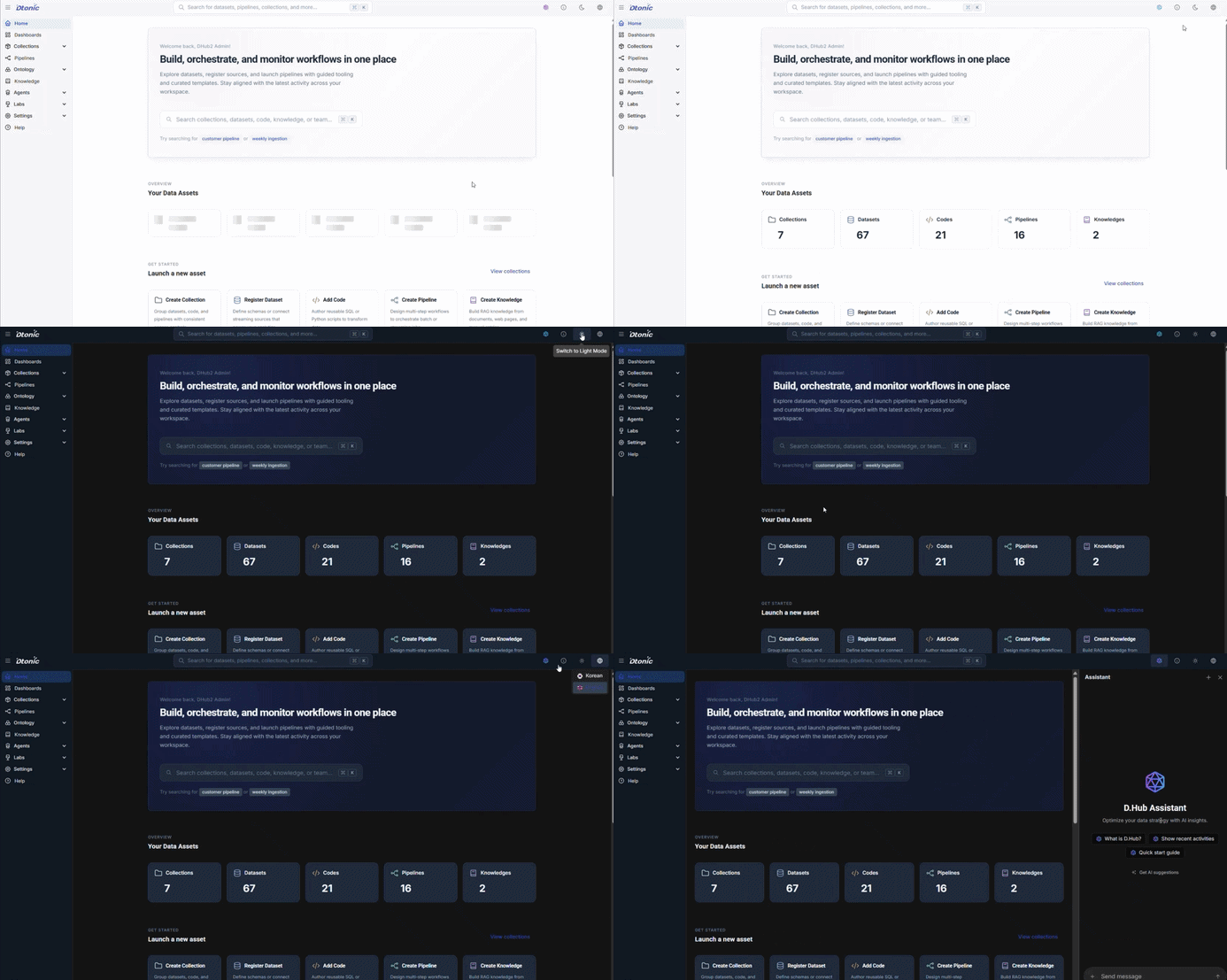
Real-Time Ingestion

Supports streams, batches, and events from field systems and edge devices

Ontology-Driven Modeling

Applies domain-specific data ontologies to organize complex, multi-source data into a consistent and machine-readable structure

Open APIs

Restful interfaces make data accessible for developers, apps, and dashboards

AI-Ready Data Fabric

Powers ML models, LLMs, and decision engines with structured intelligence

Proven in real-world deployments across defense, smart cities, manufacturing, retail, and healthcare — delivering measurable, mission-critical outcomes


Experience D.Hub in Action

Replace Fragmented Tools with One AI Data Platform

Run a proof of concept using your real workloads and benchmark D.Hub on performance, cost, and AI reliability.


D.Hub 2.0 Frequently Asked Questions

  • D.Hub 2.0 is Dtonic’s end-to-end AI data platform that covers the entire lifecycle — from data collection to AI-driven action, orchestration, and real-world execution.

    It enables organizations to build, deploy, and operate AI systems on a unified architecture, eliminating the need for fragmented data and AI stacks.

  • D.Hub 2.0 is a major evolution of the original D.Hub, designed to overcome limitations in scalability, usability, and AI integration.

    While D.Hub initially focused on data integration and management, D.Hub 2.0 delivers a complete end-to-end AI platform, including real-time data processing, ontology-based modeling, Agentic AI, orchestration, and execution.

    From 2026 onward, Dtonic will use the terms D.Hub and D.Hub 2.0 interchangeably. In all cases, this refers to the latest version of the platform — D.Hub 2.0.

  • D.Hub combines both the data platform layer and the operational/decision layer into a single system.

    While most solutions focus only on data processing or analytics, D.Hub integrates:

    • Data collection and distributed processing

    • Ontology-based data modeling

    • AI capabilities (Hybrid RAG, Agentic AI)

    • Orchestration and real-time execution

    This enables a true end-to-end AI platform, eliminating the need for multiple disconnected tools.

  • D.Hub provides a complete 7-layer architecture covering:

    • Multimodal data collection and storage

    • Distributed data processing (Geo-Hiker™)

    • Ontology-based data modeling

    • Data governance and lineage

    • Hybrid RAG / LLM integration

    • Agentic AI

    • Codeless AI / MLOps

    This ensures that all stages of the AI lifecycle are fully integrated within a single platform.

  • Yes. D.Hub 2.0 natively supports Agentic AI, allowing AI agents to autonomously analyze data, generate insights, and execute tasks.

    It also includes workflow orchestration capabilities to manage pipelines, dependencies, and operational processes — enabling AI-driven systems to function continuously in real-world environments

  • D.Hub 2.0 connects real-time data ingestion, AI processing, and operational systems within a unified architecture.

    This enables a closed-loop system where data is continuously collected, analyzed, and acted upon — supporting real-time monitoring, decision-making, and automated execution.

  • Yes. D.Hub 2.0 supports both:

    • Customer-owned data models

    • Fully managed service models

    It provides flexible control over data ownership, access, and operational responsibility.

  • D.Hub 2.0 includes built-in governance capabilities such as:

    • Tenant isolation

    • Role-based access control (RBAC)

    • Data ownership and policy management

    • End-to-end data lineage tracking

    This ensures secure, transparent, and auditable data operations across the platform.

  • Yes. D.Hub 2.0 supports flexible deployment options:

    • On-premise for secure or regulated environments

    • Cloud (SaaS) for scalability and flexibility

    Deployment can be tailored to meet enterprise requirements.

  • Yes. D.Hub 2.0 supports standard industrial and data interfaces, including:

    • OPC UA

    • MQTT / Sparkplug B

    • REST APIs

    • Kafka

    It integrates seamlessly with existing Industry 4.0 environments.

  • D.Hub 2.0 integrates bidirectionally with UNS architectures.

    While UNS acts as a real-time messaging backbone, D.Hub 2.0 enhances it by providing:

    • Persistent storage and historical data management

    • Ontology-based modeling

    • AI and analytics capabilities

    D.Hub complements and extends UNS rather than replacing it.

  • Yes. D.Hub 2.0 supports operational environments with:

    • Real-time dashboards and monitoring

    • SLA-based performance tracking

    • Multi-source data integration

    It is designed for continuous, mission-critical operations.

  • D.Hub has been deployed across multiple large-scale environments, including:

    • Smart cities and urban data platforms

    • National security and defense operations

    • Public safety and security systems

    • Industrial and manufacturing operations

    These deployments involve real-time data integration and operational decision support.

 Have Questions?

Get in touch with our team with the form below!